Not About Lumberjacks

Be mighty, and keep your axes sharp!

  • Episodes
  • Where to Begin
  • The Quick List
  • Novels
    • HCWWPD
  • About
  • Blog
  • YouTube
  • The Talent
  • Patreon
  • Press Kit

Christmas Miscellany 5

December 23, 2021 by cpgronlund Leave a Comment

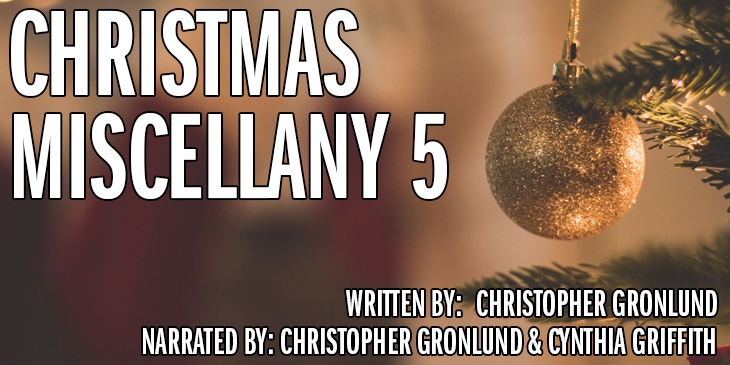
A gold glitter Christmas tree ornament hangs from a branch. Blurred background. Text: Christmas Miscellany 5. Written by: Christopher Gronlund. Narrated by: Christopher Gronlund and Cynthia Griffith.

Four stories, most of which take place during the holiday season…

  • “Stories of Fine Taste”: The stories behind two recipes (“Grandma’s Olive Loaf” – Something wicked is back in Kirkland’s Holler) and (“Fred’s English Muffin Garbage Pizzas” – A young boy finds out what’s behind a mysterious door).
  • “Reply All”: Cheryl’s not standing for office gossip about her and a co-worker.
  • “Drifted”: A character from the second Christmas episode ends up stranded on a mountain with something more naughty than him… (Listen to the last story of this episode if you need a reminder of a naughty little boy…)

* * *

Credits:

Music: Theme – Ergo Phizmiz. Story – Frizz Oli, Earle Belo, Golden Fern, Howard Harper-Barnes, Martin Landström, and pär licensed from Epidemic Sound.

Story: Christopher Gronlund

Narration: Christopher Gronlund. and Cynthia Griffith.

Episode Transcript >>

Podcast: Play in new window | Download

Subscribe: RSS

Filed Under: Episodes Tagged With: Christmas Miscellany, Fantasy, Horror, Humor, Literary, Quirky

Christmas Miscellany 5 – Transcript

December 23, 2021 by cpgronlund 1 Comment

[Listen]

[Sound of an ax chopping wood. Quirky music fades in…]

Christopher Gronlund:

I want to make one thing perfectly clear: this show is not about lumberjacks…

My name is Christopher Gronlund, and this is where I share my stories. Sometimes the stories contain truths, but most of the time, they’re made up. Sometimes the stories are funny—other times they’re serious. But you have my word about one thing: I will never—EVER—share a story about lumberjacks.

This time, it’s the now-annual Christmas episode. For 2021, it’s three stories…or four, depending how you look at it. And one of them features a character from a previous tale…

And now, the usual content advisory…

Some of the stories in this year’s Christmas episode contain violence, loss of loved ones, arguing, mention of affairs, corporate crime, car accidents (in fact, if you’re driving, be aware that the last story—“Drifted”—contains sounds of a single-car wreck), wilderness survival, mention of smoking and alcohol consumption, and—of course—swearing. You’ve been warned.

All right—let’s get to work…

* * *

Stories of Fine Taste

UPBEAT MUSIC PLAYS AS A CROWD APPLAUDS

MALE HOST

Welcome back to the holiday edition of Stories of Fine Taste, the show that shares the tales behind all your favorite recipes.

FEMALE HOST

[High pitched laughter.] Yes! We’re getting closer to a wonderful Christmas treat, but first: a recipe that will make you miss the warm days of summer picnics…

* * *

NARRATOR

Grandma’s Olive Jell-O Mold

SOOTHING MUSIC FADES IN.

NARRATOR

I always loved summers and the family gatherings that came with them. I can still see and smell tables full of food out back at Uncle Bud’s house in the hills, where we gathered for annual family reunions. I was amazed those tabletops didn’t break under the weight of such a beautiful bounty. But there was one dish my cousins and I always had a tough time with: Grandma’s Olive Jell-O Mold.

This is the story of the summer we all came to love it…

As much as I loved the food at family gatherings, the best part was seeing all my cousins in one place. As the adults drank lemonade and cold canned beer, we kids ran wild with no calls to be careful. The only rule the adults insisted we follow was to never to go back into Kirkland’s Holler.

Of course, during that fateful summer, that’s exactly what we did…

Kirkland’s Holler was a dark place between two hills on the back side of our family’s birthright lands. Even in the heat of summer, the leaves of fall never seemed to clear out, despite the constant wind racing through that gap. It was the year I read The Hobbit in school, and I can say with every confidence that Mirkwood had nothing on those woods in West Virginia.

EERIE MUSIC FADES IN:

NARRATOR (CONT.)

It was cold back there, but not just a chilling wind against our bare arms and legs—this was spectral ice boring deep into everything we were, something dark stirring in the minds of six innocent children.

Our oldest cousin started it by picking up a stick and hitting cousin Ronnie across the back. None of us—not even cousin Ronnie’s parents—liked him all that much. So, when the youngest of us, my seven-year-old cousin, Susie, joined in, it was enough to turn us all against Ronnie.

I don’t know which one of us dealt the blow that killed him, but the rock I wielded in my two hands was slick with Ronnie’s thoughts by the time the cold wind stopped and we came to our senses. We covered Ronnie’s body with stones and then washed up in Miller’s Creek on the way back to the family reunion. For some reason none of us could explain, we all went straight to the table with Grandma’s Olive Jell-O Mold. To eat it was to devour our sins against poor Ronnie.

As we gorged ourselves on olives suspended in a cloud of mayonnaise and gelatin, something in the look of all the adults’ eyes told us we weren’t the only ones to kill a cousin back in Kirkland’s Holler and acquire a taste for Grandma’s favorite dish…

Anyway, on to the recipe…

* * *

RETURN TO UPBEAT MUSIC AND APPLAUSE.

FEMALE HOST

Wow! To think, I used to like Jell-O.

MALE HOST

Hey, Marie—did you know gelatin is made out of kneecaps and knuckles?

FEMALE HOST

Why are you like this?

(BEAT)

Anyway, you can find links to all these recipes—and more—on the Stories of Fine Taste website.

(BEAT)

Which brings us to the story behind our final recipe of the day…

* * *

NARRATOR

Fred’s English Muffin Garbage Pizzas

SOOTHING MUSIC FADES IN.

NARRATOR

My parents divorced when I was five and my sister was ten. Every other weekend, we visited our dad (and his roommate, Fred) in the city.

The house my father and Fred shared was like a fort built by kids, a ramshackle place that looked like it could be toppled with one good shove. It consisted of a small mud room where people entered. A bathroom, a kitchen, and a front room rounded out the tiny abode.

There were no bedrooms. My father had a single bed in the mudroom, and Fred slept on the couch in the front room with his cat, Rat. When winter in Chicago settled in, my father slept in the kitchen—where my sister and I slept when we visited. It was like camping, the two of us in sleeping bags on the floor. Once, my dad set up his tent in the kitchen, and we made what Fred called English Muffin Garbage Pizzas in the oven—and roasted marshmallows over a burner on the stove top.

On weekends my sister stayed home, my dad and I huddled together in the mudroom bed, where he’d read Fantastic Four comics to me, and then rub my head until I fell asleep. I slept so soundly on those nights that if I never woke up again, it would not have been a bad way to go.

Even as a kid, I recognized that my father and Fred were broken men. Somehow, existing in the same space together helped the other—and on weekends my sister and I visited, that tiny house was filled with a happiness they seemed to need. We ordered pizza, listened to music, and spent time in the front room reading. Fred and my father told stories, and we played a game called Truth or Lies in which the two made us guess if the stories they told were made up or not. Fred convinced me he could fly during a round of the game. When I asked him to teach me, he shared with me a magazine article about lucid dreaming and said that first, I had to be able to fly in my dreams. It’s only now, looking back on those times, that I realize why I believed so many of their lies: they were the stories my father and Fred wished were true. They were always told with a particular yearning excluded from their truths. I recognized that early in my life.

There was one strange thing about that tiny house where my father and Fred lived: a door the led to nowhere.

It was in the front room, and I figured it must have originally been the main entrance to the house. But wandering around outside to where it should have been, there was no sign a door was ever there—and this was not a house worthy of any remodeling. When I asked my dad where it went, he said he didn’t know. It was behind Fred’s big stereo and the TV—and he said he never felt the urge to move everything to check. When I asked Fred what was on the other side of the door, he said, “A safe place…”

My sister died when I was eight years old. I was in the middle of reading through The Chronicles of Narnia with her when she lost her battle with leukemia. She loved the series, and I wanted to read the same books she read.

Later that year, Christmas fell on a weekend my dad got me. My mom dropped me off Friday while my dad was still at work. I was reading in the front room with Fred when he got up and said he had to run an errand. He hopped on the Triumph Trident motorcycle he’d later sell to my dad and sped away. (Even in the cold of winter, that’s how Fred got around.) Left with an empty house with a bit of time, I wheeled Fred’s stereo system far enough away from the door to open it and squeeze my way inside.

It was a closet.

Still…I knew there shouldn’t have been enough room, there, even for coats. So, I pushed my way through until I found myself outside in the snow. It wasn’t the tiny yard in front of Fred and my dad’s house, though—I was in a forest. When I saw the light post, I wondered if it was all a lucid dream.

Someone was walking toward me—my sister! In the glow of the lamplight, we talked about her favorite books, and I told her how much she was missed. She told me everything would be okay, and I believed her. When she said she had to go back, I didn’t cry.

When I returned to the front room, I smelled cooking from the kitchen. Fred was there with a couple hot English Muffin Garbage Pizzas fresh out of the oven. He handed one to me.

“You didn’t really have an errand, did you?” I said.

“Nope.”

“You knew I’d go through the door?”

“Yep.”

“What is that place?”

“I don’t know. I can’t explain it. But any time you need it, it’s there for you.”

Fred was right: each time I went through, what existed on the other side of the door changed. Sometimes it was a forest; other times, I floated through space. It was always what I needed in the moment. There was no explaining it, but each trip in and out changed me. No matter how bad things got in the real world, it was there waiting…until my dad met someone new and moved into her house with her son.

After the move, we lost touch with Fred. He sold what few things he had and wandered off with Rat. I always suspected he went through the door and never came back. I like to think he’s still there.

These days, I don’t have a physical safe space like what was beyond that door. These days, when I need to feel safe, I make Fred’s English Muffin Garbage Pizzas…and everything works itself out.

Here’s the recipe…

* * *

Reply All

On Cheryl’s last day at Globotek, when she sent the obligatory, “Thanks so much—I’m moving on,” email to roughly two hundred people, she forgot to use the blind carbon copy feature. So, when Brad Anderson accidentally replied to all and said he’d miss being sent to the Chicago office together and sneaking into each other’s rooms at night, it didn’t take long for news of the affair to spread throughout the company.

All morning, as people passed her desk, they stared at her as though she were on display: “The Globotek Jezebel.” Meanwhile, on the other side of the floor, Brad kept his head down as a seemingly endless parade of salesmen flashed him a thumbs-up as they wandered by.

Cheryl’s phone buzzed.

“I’m so sorry,” the text message said.

“Don’t worry about it. I should have BCCed everyone.”

“Want to get lunch later?”

“Sure. I have a going away thing with my team at 11:00. After that?”

A heart emoji.

* * *

They gathered in a conference room with the intention of wishing Cheryl good luck with her new endeavor, but instead, everyone fell silent when she entered. When the tension became too much to bear, Cheryl said, “Look. About that email…”

Roger Simmons snickered like a little boy who finally said “Hell” for the first time.

“Is something funny, Roger?”

“No. Just…”

“Just what?”

“The email. From Brad.”

“What about it?”

“It’s just…”

“Juuuuuust?”

“Nevermind.”

“No. You’re all acting like Brad and I did something wrong. You want me to clear the air? Fine!  All any of us do, here, is work. Constantly. It’s one of the many reasons I’m leaving.

“Look—Brad and I are consenting adults. So what if he and I sometimes had drinks and scratched an itch? Most of the people in this room will do anything to travel or stay late at the office and avoid your home lives. Brad and I are at least honest about it. It’s not even against company policy, as long as one of us wasn’t the other’s manager.

“I mean, Hell—Bill, here’s, been fucking Tracy over there since the company Christmas party, what: three years ago! We all know it! And you know what? Last time I checked, you two are both married. Brad and I are at least single.”

Roger looked down and chuckled.

“There you go laughing again, Roger. You know what I find funny? How anytime one of us gets you alone, you spend the entire time ranting about what a dick Steve is. But you’d never know that by how far up his ass you’ve shoved your nose!”

Angie Bates got as far as, “Cheryl, calm down—” before Cheryl said, “Coming from you, that’s a riot, Ang. You know they call you Backstabbing Bates, right? If anyone needs to calm down it’s you. I might have screwed Brad, but you? You’ve screwed over everyone in this room!”

Anthony Cavett shifted in his chair.

”What do you want to say, Tony?”

“Nothing.”

“No. You were about to say something. I could see it in your face.”

“Okay. I was about to say you’re not being very grateful. Why don’t you just leave early if you’re going to be like this?”

“Good idea. But before I do, I want you to know my botched email isn’t the only one I sent this morning. Remember that time you treated me like your personal secretary last month? Well, uhm…I noticed some strange payments to a non-existent company when I was working with you. Did a little research and traced it back to you making fake invoices, sending them to Globotek, and depositing the funds into an account you own. That’s big-time fraud right there. So, I also sent email and documents to local news stations and the FBI this morning, letting them know what you’ve been up to.

“You can close your mouth, Tony. You had to know someone would eventually spot that. Or are you really that full of yourself?

“So go ahead, all of you, and make me out to be some horrible person. What Brad and I did never affected our performance at work or anyone in our lives. The rest of you can’t really make that claim. Thanks for this little going away party—it’s been fun…”

When Cheryl opened the door to leave, Brad was on the other side about to head in.

“What’s up?” she said.

“I figured I’d stop in to say goodbye. And if anyone was giving you grief, tell them to mind their own business. You’d think we stepped back to junior high school the way people are acting about that email.”

He surveyed the blank faces in the tiny conference room.

“What’s with them?” he said.

“Oh, you know these guys—always busy thinking about work…”

* * *

Drifted

No winter weather warning was going to keep Robert Johnson from visiting his parents for Christmas. He’d made it through Colbert’s Pass without tire chains in worse conditions—he’d be damned if a bit of rain and snow flurries would stop him. Even when the storm grew to whiteout conditions the higher he climbed, he put faith in the all-wheel drive of his Mercedes G-Class SUV; or rather, faith in what the salesman told him the day he’d bought the vehicle with cash: “You’ll not find a better combination of function and luxury on the planet. This thing? It eats Range Rovers for breakfast.” And so he climbed, on and on, up and up—a methodical ascent like everything else in Robert’s lush life.

He was near the top when he felt the tires break free from the road. As the SUV pulled to the right, Robert realized it was the road that had broken free, a packed layer of snow and ice separating from a slick layer below and sliding toward the edge of the pass. There’d be no guardrail to stop him—it was buried several feet beneath the snowpack. Robert gunned the engine, giving him just enough forward momentum to miss a hundred-foot fall before rolling even further down the mountain. But it wasn’t enough to stay on solid ground. He turned into the direction of the slide and rode the ice into a massive snow drift at the bottom of a hill.

No matter how careful Robert was or how hard he struggled, he had no luck backing out. He tried his phone and the SUV’s Emergency-Call button, but the pass was disconnected from such comforts. He undid his seatbelt, climbed over the driver’s seat, and forced one of the back doors open. The front half of the SUV was buried. Powdered snow gave way beneath Robert’s feet when he tried climbing up to the road. At least the exhaust was free from winter’s clutches—if nothing else, he’d be able to run the engine and have heat.

Before returning to the warmth of the SUV, something caught his eye in the trees. One moment it was there, and then it wasn’t.

“It’s just a stag,” he told himself, even though it moved more like a man…

* * *

Robert’s night on the mountain was made bearable by an idling engine providing heat, a bag full of convenience store snacks serving as dinner, and a tall bottle of alkaline water promising perfect hydration. When he stepped out to relieve himself in the morning, he couldn’t tell if snow was still falling or blowing off the mountain by the wind. Thick flakes drifted like volcanic ash, consuming the glowing silver eye of the sun on the horizon—a mocking promise of warmth shut out by snow. The drift had grown during the night, consuming all but the rear driver’s side of the Mercedes and a spot in the back near the exhaust. If the snow continued to fall, his next night on the mountain would not be as forgiving. Robert needed a plan.

He pulled the spare tire cover off the back of the SUV and scratched HELP into the paint with his keys. Below that, and arrow pointed down to the drift just out of view. Robert propped it up along the side of the road, hoping if a plow came along that it would be legible enough that they’d stop and save him from the storm. After that, he assessed his gear. A suitcase full of clothes could serve as layers and covering if the SUV ran out of gas and heat was no longer available. A fruitcake and tea biscuits for his mother would sustain him for days if needed. He could use the plastic bag from the convenience store to collect snow and let it melt to the closest thing to room temperature to stay hydrated. If it took days to find him, he’d make it—and Robert figured his parents had already alerted others that he never arrived as planned.

* * *

He was dozing in the front seat when he felt something shaking the SUV. At first Robert thought the snow drift, like the road, had broken free of the layers below and was sliding down the mountain. Or maybe enough snow had fallen to cause a mini avalanche from the road above and had slammed into the side of the vehicle. But as the haze cleared from his head, he realized the Mercedes was bouncing up and down.

He checked the rearview mirror, but the back window was caked in snow—the backup camera covered in ice. Still, he could see a large shadow moving from the rear of the vehicle and into the woods.

“A bear,” he thought. “Or an injured mountain goat moving on its hind legs…”

Hours later, when the storm cleared and the urge to defecate became too much, he crawled out through the back door with some leftover napkins from his convenience store stop and squatted beside the SUV. “What a way to go—eaten by a bear in the most vulnerable of positions.” But no attack came his way. He buried what he could in the snow just as the engine finally puttered out of gas. Before returning to the SUV, he checked the back for any sign of what shook the vehicle. A set of tracks emerged and returned to the woods. A massive bare foot like every Sasquatch casting he’d ever seen on TV and…an unsettling round print. If it was a Bigfoot, it appeared to have a single peg-leg, like a pirate.

Robert quickly cleared the snow from the back window and removed the tire iron from the foot well of the rear bench seat.

If something was going to attack him, he’d not go down without a fight.

* * *

Sleep that night came in short bursts between falling into deep dreams and waking up cold. A bit of movement and repacking clothes around his body warmed him just enough to fall back asleep.

When Robert opened his eyes during one of his waking cycles, a massive creature surveyed him through the windshield. It had long, curved horns like an ibex. Its face, twisted and grotesque, shined in the moonlight. Its fur rippled in the breeze. A long tongue lolled from its mouth. The beast grinned at Robert with a mouth full of fangs.

He waited to wake up but couldn’t. “A lucid dream?” he thought. But unlike a movie where an audience is led to believe something on screen were real—until revealing it was all just a dream—Robert knew he was wide awake.

He reached to the passenger seat and felt for the tire iron. The cold steel made his hand ache as he clenched it in defense.

With a long, sharp fingernail, the creature tapped on the windshield. It dragged its hand across the glass and grinned.

Robert swore it laughed as it turned away and disappeared into the woods.

* * *

Nothing, not even the call of nature, could convince Robert to leave the SUV the following morning. His water bottle became a urinal; the plastic bag from the convenience store, a toilet. By afternoon, he’d grown used to the stench. As Christmas Eve fell, he’d convinced himself to go on the offense. He grabbed the tire iron and left the safety of his vehicle.

“You want me, come and get me!” he shouted.

Something moved in the forest. Two icy-blue eyes glowed brighter with each step. Robert readied the tire iron in his hand—it was not the first time he faced fear on Christmas Eve.

The beast held a chain in its left hand and a bundle of birch branches in its right.

“Why are you doing this?!”

Robert was surprised to hear the creature say, “You still carry with you the scent of a naughty child…”

“I’ve atoned for who I was.”

“Have you? How many people under your command worked today, while you set off to visit your parents? How many of those people fear you, as you fear me?”

“I’m not a monster like you!”

“Saying something is so does not make it a truth…”

It only took two strides for creature to close the distance. Robert swung the tire iron with all his might, but Krampus wrapped it up with his chain. With one tug, Robert’s only defense disappeared into the woods.

The beating came next, a rapid-fire swatting of branches flaying flesh with each strike. The defeat came quickly, at least. Krampus raised Robert up and over his head, but something happened as the beast prepared to drop Robert into the basket strapped to its back. There came the sound of other chains…and jingling.

Krampus howled as he was pulled up the hill toward the road. By the time Robert’s vision cleared, the beastly cries stopped. A comically large red tow truck with a plow attached to its front was parked at the top of the hill, its emergency lights flashing in the night. A red flare sailed through the air and landed near Robert’s feet as Not-Santa slid down the hill on his grimy boots. The smell of forest gave way to cigar smoke.

“Well, if it isn’t little Bobby Johnson.”

“Not-Santa?” Robert said.

“The one and only! Looks like you got yerself into a bit of a bind, huh?”

“Yeah. I was coming through the pass and ended up down here. Was that…?”

“Krampus? Yeah. He’s not a bad guy in his own right—we have some things in common, in fact—but each year, he steps a bit deeper into my turf. That Bavarian baddie gets his own night earlier in the month, but his lore’s spread a lot in recent years. Now he’s everywhere. And that’s good, and all, ‘cause the world is full of naughty people needing to be taught lessons. But tonight belongs to my brother and me.”

Not-Santa ran his fingers through his dirty beard. Robert looked at the word tattooed across his knuckles: PAIN. He remembered that night from when he was a kid…

 “Anyway, let’s get you outta here so you can get on to see your folks.”

Not-Santa raised his MOJO hand. A clattering chain with a large hook at the end flew through the air and landed in his palm.

“We’ll get your SUV oriented the right way and then haul you up and outta here!”

* * *

When Not-Santa was done towing Robert’s Mercedes up the hill and onto the road, he handed him a cup of cocoa.

“I’d normally put whiskey in that, but you’ll soon be driving. Mustn’t be naughty, ya know?”

“Yeah.”

As Robert took a sip, Not-Santa said, “He was right, ya know?”

“Huh?”

“Krampus. What he saw in you is right. You can work however the hell long you want, but your insistence that the people you manage be invested as much as you is bullshit. This fuckin’ SUV is worth more than most of their houses…that is, if they’re lucky enough to be upside-down in a mortgage. What incentive do they have to do what you demand of them, other than fear of being in the streets? Most of them will never make a fraction of what you make, even if they do everything by your rules. Keep this up, and in a few more years, don’t be surprised if you’re visited by a series of ghosts trying to scare you straight. Now, let’s get you off this mountain…”

* * *

On Christmas morning, Robert handed out gifts from beneath the tree to his parents. When the piles of wrapping paper were cleared, just like that fateful morning when Robert was seven, his father, Ted, spotted additional gifts behind the tree.

“What’s this?” he said.

“I don’t know,” Robert’s mom, Deidre, said.

Three gifts, one for each, all with a tag reading FROM: NOT-SANTA

Robert’s mom opened the most perfect fruitcake, and his father—a bottle of Louis XIII cognac. A note read, “These should make for some cozy evenings. N.S.” They looked at Robert.

“It wasn’t me,” he said.

Ted sniffed the air. “Did you smoke a cigar last night?”

Robert shook his head no.

Deidre said, “I smell it, too. Do you remember that one Christmas morning…?”

Robert’s parents’ words fell away as he unwrapped his gift, a first printing of Charles Dickens’s A Christmas Carol from 1843. Included was a note, written on a fast-food burrito wrapper. “To Bobby. Don’t become a Scrooge, ‘cause next time you find yourself stuck on a mountain fighting a soul-eating entity, you’re on your own. Keep Christmas well, and keep an eye on your dad…that hooch goes down smooth. Your ever-watching pal, Not-Santa.”

* * *

[Quirky music fades in…]

Christopher Gronlund:

Thank you for listening to Not About Lumberjacks…Theme music, as always, is by Ergo Phizmiz. Story music this time is by Frizz Oli, Earle Belo, Golden Fern, Howard Harper-Barnes, Martin Landström, and pär, all licensed through Epidemic Sound.

Sound effects are made in-house or from Epidemic Sound and freesound.org. Visit nolumberjacks.com for information about the show, the voice talent, and the music.

It’s been a good and busy year for Not About Lumberjacks, and I can’t thank everybody enough. While the show doesn’t reach a very large audience, listenership has almost doubled in 2021. Thanks so much for that!

I’m taking January off to plan for another great year of stories. I have a list of what I plan to write, some roughed-out sections of tales already started, and one beefy story (the mystery set in a bog in northern Illinois I planned for 2021) pretty much ready to go. My goal for 2022 is a story every other month. As busy as the second half of this year was for me, it was also a very productive time for the show.

So happy holidays to you all—here’s to a snazzy new year ahead!

[Quirky music fades out…]

[The sound of a chopping ax.]

Until next time: be mighty, and keep your axes sharp!
Filed Under: Transcript

Behind the Cut – In Cypress Slough

December 13, 2021 by cpgronlund 3 Comments

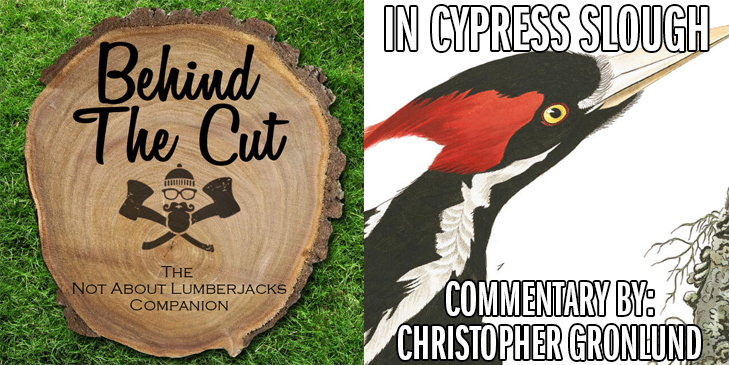
Left side: A cross section of a tree in grass. Text: Behind the Cut - The Not About Lumberjacks Companion.

Right side: A painting of an ivory-billed woodpecker. Text: In Cypress Slough - Commentary By Christopher Gronlund

“In Cypress Slough” includes two gay characters, but it’s not a story about being gay in East Texas.

In this behind-the-scenes look at the latest Not About Lumberjacks story, I talk about representation, the stories I’d never write (and why), and how I approach writing disenfranchised characters who have experienced lives I can only imagine.

* * *

Links to some people and things mentioned in this episode:

  • ScreamQueenz
  • Writing the Other
  • Nisi Shawl
  • Cynthia Ward
  • David Bowles
  • Invisible | Invisible 2
  • Craft in the Real World
  • Alba Salix
  • Fable and Foley
  • Natalia Sylvester

Episode Transcript >>

Podcast: Play in new window | Download

Subscribe: RSS

Filed Under: Behind the Cut, Episodes Tagged With: In Cypress Slough, Literary

In Cypress Slough – BtC Transcript

December 13, 2021 by cpgronlund Leave a Comment

[Listen]

[Intro music plays]

[Woman’s Voice]

This is Behind the Cut. The companion show to Not About Lumberjacks.

[Music fades out]

Christopher Gronlund:

Behind the Cut is an in-depth look at the latest episode of Not About Lumberjacks and likely contains spoilers of the most recent story. You’ve been warned…”

* * *

Some people have wondered if “In Cypress Slough” was inspired by recent-ish news about ivory-billed woodpeckers being declared as officially extinct.

It wasn’t.

I originally planned to release it in November 2020, but it required research and an effort I didn’t have time for a year ago. It just-so-happened I was back to working on it this year when the ivory-billed woodpecker was declared officially extinct.

But I’m not here to talk about species humans have destroyed. Right now, I want to talk about how I handle writing characters who have experienced prejudice I’ve never had to face.

* * *

If you’ve spent enough time on pop-culture social media, you’ve likely seen someone complaining about gay characters in stories. Many a one-star Amazon book review reads like this: “I loved this book…until the author decided to push the gay agenda down my throat!” How dare popular movies include a gay character…and definitely don’t get them started on Jon Kent, Superman’s son, being bisexual!

Include a gay character in a story and some will deem you a social justice warrior. (As though that’s a bad thing to be!) I can’t imagine listening to “In Cypress Slough” and thinking, “This was great…up until Christopher felt the need to make Jorge gay! Why’d he have to go and do that?”

Of the 161 main and supporting characters in all Not About Lumberjacks stories to date, only five are gay. That’s about three percent, which is a lower percentage of gay people in society. (If you’re curious who those five characters are: the narrator of the Christmas episode, “Greetings” and his husband; one of the unnamed girls in “Tracks,” the opening story to last year’s Christmas episode story; and Jorge and Devin from “In Cypress Slough.”)

In the case of “Greetings,” Jeremy and Kurt simply exist as a couple like any other. (I wrote that story with Patrick Walsh from the ScreamQueenz podcast in mind as narrator. I’d been a guest on Patrick’s show multiple times, and I wanted to work with him on a Not About Lumberjacks story.) As far as “Tracks”—some people saw it as a story about two friends growing apart; others got the intended bit that one of them’s gay. “In Cypress Slough” is the only story I’ve written where a character’s sexuality is more than just a passing thing.

* * *

As writers, we can write about whatever we want.

If I want to write a story about what it’s like to grow up Black in the South, I can…but there are many people far more suited to tell that story—people who’ve actually lived it.

I was born on the north side of Chicago and moved to a northern suburb when I was two. When I moved to Texas at fifteen years old, I moved to a very white town…so much so, that its history of being so tightly closed has made nationwide news in recent months. (Do a Google search for “Southlake Carroll High School investigation” if you’re curious.) I never had my resume cross a desk, only to be rejected by someone because of how my name sounds. While I’ve faced hardships in life, I’ve never been discriminated against for where I was born, my sexuality, or the color of my skin.

This isn’t to say that I should only write stories about what I’ve experienced, but there are certain stories where the point of telling it is carries a greater purpose than I’m suited to tell.

I’m suited to tell a story about the bullying I endured as a geeky atheist at Carroll High School, but I’m not the best voice to tell the story about the only Black student in my class when I was there and the hell she endured for simply existing. (But you can be damn sure I based Davy Boyd from “In Cypress Slough” off the kinds of people I went to school with who tormented her family and others.)

* * *

So why, then, does “In Cypress Slough” include two gay characters?

Because representation matters.

The purpose of the story is not what it’s like to grow up gay in East Texas—it’s about a guy who spots an extinct species and what happens as a result. It just happens he’s gay, just like other characters who just happen to be straight. (Which no one ever seems to fume about.)

Initially, Jorge returned to Texas A&M university to show a female biologist the ivory-billed woodpecker footage he got. And, because I wanted to leave the story with something more for the future, I felt it would not be a bad idea to leave the story with a budding romantic [heterosexual] relationship.

But as the story behind Davy Boyd’s bullying became more prevalent, things changed.

* * *

I didn’t mention Carroll High School above just to take shots at a place I hated as a teenager. As I roughed out “In Cypress Slough,” news about the school kept popping up. And I thought about [and chatted about] what it was like back when I attended.

I have a friend from the school who’s a year younger than me. When I got my driver’s license, I gave him rides to school. People suspected this friend was gay (he is), and based on that assumption, he was picked on. By associating with him, people gave me grief as well.

When I gave other friends rides to school, no one cared…just like no one cares when a character is straight in a story. But when I gave this friend rides, suddenly I was told I did so for sexual favors. People told their friends not to get close to me because I probably had AIDS.

What my friend endured was far worse.

And so…as Davy Boyd became a reflection of the small-town bullies I knew growing up, and the friendship between Jorge and Kade developed, Jorge’s sexuality factored into the story.

But it’s still not the main point.

* * *

While I can be a bit brash and goofy at times, I’m also a pretty considerate person. Perhaps some of that comes from being picked on when I was younger…trying to consider the feelings of others even if I haven’t experienced the same wrongs they’ve experienced. So, when I write a character who’s lived through something I have not, I consider the words I put down with an additional level of care. It’s not so much, then, about the tone of the prose, but also the purpose of the story.

The purpose behind “In Cypress Slough” is telling a tale about the human toll on the environment, shared with listeners and readers through the eyes of two best friends still forced to deal with a bully from their past. It is not to say, “This is what it was like to grow up gay in the Piney Woods of East Texas…”—there are other writers far more suited to tell that tale. But that doesn’t mean every character I write must be a milquetoast, cis-gendered white dude from suburbia.

* * *

There’s a great book by Nisi Shawl and Cynthia Ward called Writing the Other: A Practical Approach. (I’ll include a link to the book in the show notes, or you can just go to writingtheother.com for more information.) The book grew out of something Nisi Shawl heard at a writing workshop…someone saying they never included characters with differing backgrounds than their own because you’re likely to get it wrong—so, why bother trying?

Nisi saw that mentality as taking the easy way out…and further white-washing literature. They set out to write an essay about how to write characters with differing racial and ethnic differences than their authors.

Taken from the book’s description:

In the course of writing the essay, however, she realized that similar problems arise when writers try to create characters whose gender, sexual preference, and age differ significantly from their own. Nisi and Cynthia collaborated to develop a workshop that addresses these problems with the aim of both increasing writers’ skill and sensitivity in portraying difference in their fiction as well as allaying their anxieties about “getting it wrong.”

Writing the Other and the personal essays on representation in science fiction and fantasy, Invisible and Invisible 2, are great books. (Hell, I’ll also recommend Matthew Salesses’s Craft in the Real World as a must-read for any writer.)

Sadly, I’ve seen writers who have scoffed at the notion of considering these things and what stories to tell (or not tell). But to ignore that is to ignore more than just craft—it’s to ignore the feelings of entire groups of people. (And that’s a shitty thing to do.)

* * *

I’ve also seen writers who say why bother trying because you’ll be attacked by “social justice warriors” no matter what you do—so just do whatever you want.

That’s a cop out.

I know about Writing the Other because I considered changing a character in the last novel I completed, A Magic Life. I had concerns about a Hualapai character born in northern Arizona, but raised by Swedish immigrants in Arizona and Colorado.

I mentioned my concerns to a diverse group of writers I know—on a Discord server for writers and fans of Fable and Foley’s Alba Salix (and other audiodramas).

Not one person told me I wasn’t allowed to write about this character; in fact, they suggested Writing the Other and ways to approach this character: making sure he’s just as important as other main characters—not just there to prop up the protagonist. Ensuring I’m writing about him as a person and not speaking for an entire People of which I am not. Portraying him in a positive light and, should something bigger happen with the book, finding someone who’s lived closer to his life and paying them a fair fee to read the manuscript for anything I might have gotten wrong.

If you’re familiar with the release of Jeanine Cummings’s American Dirt, following this advice could have avoided much of that wreck (but still not have helped with the indefensible move of plagiarized sections of the book being lifted directly from Latino authors)!

Speaking of the American Dirt debacle and this whole point, it’s summed up rather well by author and professor David Bowles (BOWLS):

“There is nothing wrong with a non-Mexican writing about the plight of Mexicans. What’s wrong is erasing authentic voices to sell an inaccurate cultural appropriation for millions.”

* * *

Representation without speaking for a group of people isn’t hard.

I once gave a talk to a local podcasting group about storytelling. One of the slides supporting what I talked about mentioned the importance of thinking things through. For that slide, I used an image of a Black woman looking up in thought.

After the talk, I was approached by a woman who thanked me for that. She loved attending local meetups about podcasting and web tech, but mentioned how the crowds around here are largely white…and how presenters usually used white people (mostly males) in all their slides containing people. She was happy just to see somebody on a slide who looked like her.

I’m friends with a writer from Perú who’s suffered what many writers like her have experienced: she’s been invited to book festivals and placed on the obligatory “Other Voices” panel discussion and then…no others. Just that! The festivals where she’s been treated equally and given a voice on panels having nothing to do with where she was born and who she is are the festivals she returns to—because they see her as a person and not an object.

* * *

My stories tend to be about people who have rarely seen the spotlight and why…or…stories in which they have their moment. While I will never attempt to write a story about what it was like growing up gay in the 80s, it doesn’t mean gay characters will never appear in the stories I tell.

I recognize there are stories left in better hands than mine, and those are stories I will never attempt to write. I don’t feel anyone is taking anything from me by pointing out that sometimes I’m not the right author for a story.

I was a right author for “In Cypress Slough.” (I won’t say the right author because it’s a story many others could have written.) I care deeply about animals and love the landscape of East Texas. I grew up around people who worked menial jobs—my dad was a mechanic. Hell, I’ve been that person working those kinds of jobs. It’s my kind of story. And, in the process of writing it—as a nod to some of my friends—I chose to make Jorge gay.

I will write characters who are different than me and sometimes find (and pay) narrators better suited for those stories. (And sometimes, like “In Cypress Slough,” I’ll narrate things myself because I’m really pressed for time.)

But I will never try telling a more important story about what it’s like growing up truly oppressed, even though nothing prevents me from doing so…other than my own nature.

For all the hardships I’ve faced, none of them are the result of me being a white guy from suburbia. I don’t acknowledge my privilege out of any kind of shame or to virtue signal—it’s simply a fact that I have opportunities many others do not. And because I recognize this and I’m not an asshole, I will always do my best to acknowledge the advantages I’ve had and put characters who might not have had such luxuries in a positive light.

* * *

Thank you for listening to Not About Lumberjacks and Behind the Cut. Theme music for Behind the Cut is a tune called “Reaper” by Razen. Visit nolumberjacks.com for information about the music, the episodes, and voice talent.

Later this month, it’s the annual Christmas episode—three holiday stories, one of which includes the return of a character from an earlier Not About Lumberjacks Christmas episode.

Until next time: be mighty, and keep your axes sharp!
Filed Under: Transcript

Chopping Away: In Cypress Slough Released

November 28, 2021 by cpgronlund Leave a Comment

Christopher Gronlund standing on rocks in a small stream...

First, I hope everyone in the U.S. who celebrates Thanksgiving (however you celebrate the day), had a nice time with (or without family)…eating whatever it is you eat, and being thankful for things in your life. The stories behind the holiday always seemed a bit hyped to me as a kid, so it was always about being with family for me — not about pilgrims and stuff ’cause I was never a fan of those guys.

Today, it’s much of the same, but on a smaller scale (my wife, my mom, and me) and with different foods. (This is Thanksgiving #23 or #24 without turkey. I went vegetarian on a dare in my early 20s, and I had a few meat-less Thanksgivings then. I went back to vegetarianism in late 1999 and vegan in late 2000. Since then, Thanksgiving’s moved up in my list of favorite holidays.)

This year, I’m also thankful for another cycle of Not About Lumberjacks.

The response to “In Cypress Slough” has been great; in fact, in 36 hours, it had as many listens as a full week of a new release…and in a handful of days, it’s passed the total listens of “Calling Out of Time” since its release several months ago!

The Rest of the Year

The remainder of 2021 will see the Behind the Cut episode for “In Cypress Slough,” which will likely be about the care I think writers need to put into writing characters who have experienced hardships they’ve never personally faced. And then, of course, December will be the annual handful of micro fiction and a Christmas story.

What about 2022?

I already have handfuls of stories roughed out for 2022, including the mystery I set aside for “Milkboy.“

I’ve mentioned that I’ve considered starting a Patreon account for Not About Lumberjacks, and I’m still back and forth on the idea. But…since it sticks around, it’s probably best to stop talking and do it!

* * *

So…that’s the latest!

I’m proud of the stories I released in 2021, and plans for 2022 indicate that’s not going to change.

Thanks to everybody who’s listened to and supported the show…I have fun putting stories out there, and I love that people find something in the things I write…

Filed Under: Blog Tagged With: a-peek-at-process, chopping away, In Cypress Slough

In Cypress Slough

November 24, 2021 by cpgronlund 2 Comments

Painting of an ivory-billed woodpecker head.

Text reads: In Cypress Slough
Written and Narrated by: Christopher Gronlund

Two deadhead loggers find something remarkable in the Piney Woods of East Texas, putting them at odds with a large timber company.

Content Advisory: In Cypress Slough deals with bullying, violence (including gun violence), homophobia, the destruction of wildlife and habitat, structure fires, mention of suicide, and swearing. Also, if you’re driving: be aware there’s a scene with approaching emergency sirens and one LOUD jump-scare (a gunshot).

Mitch Todd’s Andromeda Factory trailer.

* * *

Credits:

Music: Theme – Ergo Phizmiz. Story – River Foxcraft, licensed from Epidemic Sound.

Story and Narration: Christopher Gronlund.

Episode Transcript >>

Podcast: Play in new window | Download

Subscribe: RSS

Filed Under: Episodes Tagged With: In Cypress Slough, Literary

In Cypress Slough – Transcript

November 24, 2021 by cpgronlund 1 Comment

[Listen]

[Sound of an ax chopping wood. Quirky music fades in…]

Christopher Gronlund:

I want to make one thing perfectly clear: this show is not about lumberjacks…

My name is Christopher Gronlund, and this is where I share my stories. Sometimes the stories contain truths, but most of the time, they’re made up. Sometimes the stories are funny—other times they’re serious. But you have my word about one thing: I will never—EVER—share a story about lumberjacks.

This time, two deadhead loggers find something remarkable in the Piney Woods of East Texas, putting them at odds with a large timber company.

And now, the usual content advisory…

“In Cypress Slough” deals with bullying, violence (including gun violence), homophobia, the destruction of wildlife and habitat, structure fires, mention of suicide, and swearing. Also, if you’re driving: be aware there’s a scene with approaching emergency sirens and one LOUD jump-scare (a gunshot).

Before we get going—really quick: did you know one of the founders of Podcast Movement is about to launch an audiodrama? (There’s even a possibility it’s out by the time you listen to this episode of Not About Lumberjacks.) Mitch Todd’s Andromeda Factory is on track to be out in the world soon, but you can listen to the trailer right now by searching for Andromeda Factory wherever you get your podcasts. That’s A-N-D-R-O-M-E-D-A Factory. I’ll include a link to the trailer in the show notes. And…I hear the guy who narrated this very episode of Not About Lumberjacks—ME!—may have contributed to an episode.

All right—let’s get to work…

* * *

In Cypress Slough

[Guitar Music plays…]

2010

The blur of colors in the trees changed everything: red, black, and white in exactly the right places.

“Did you see that,” Jorge said from the front of the jon boat.

Kade shook his head. “See what?”

“That bird.”

“Lots of birds out here.”

“Yeah, but that one shouldn’t be here.”

“You mean, like, it should be someplace else?”

“No. I mean it shouldn’t be here at all. It shouldn’t exist.”

Moments before, Jorge was telling Kade about the early efforts of over-water oil drilling up north on Caddo Lake. And then, there it was—so clear that it could not be disputed.

“Turn back,” Jorge said.

“I’m not turning around for a bird.”

“You’re not turning around for just a bird. I swear on everything I hold dear in life: I just saw an ivory billed woodpecker.”

[Guitar music fades out…]

* * *

Jorge and Kade met in junior high school, when a group of bullies cornered Kade in the locker room and Jorge stepped in to help. They both took a beating, but from that moment, the two became inseparable friends—parting only when Jorge left their hometown of Lumberton, Texas to study vertebrate zoology at Texas A&M University. When chemistry classes and financial struggles forced Jorge home, Kade was running his dad’s custom furniture shop and offered Jorge a job. In time, they struck out on their own, becoming known beyond the Big Thicket of East Texas for their custom builds. An article in Southern Living about their work with reclaimed sunken cypress logs found them with an abundance of orders and left them astonished by how much people would pay for something they viewed as routine work: building slab tables, benches, and desks.

Jorge convinced Kade they could make even more by reclaiming their own cypress sinkers. While Jorge never followed his father into offshore commercial diving, he shared his dad’s love for being underwater. They split their year diving the Neches River and its tributaries for cypress butt logs that fell off barges in the early 1900s and then building furniture through winter.

* * *

[A boat engine winds down…A trolling motor outters along…]

Kade turned the jon boat around, and Jorge went to the trolling motor when they slowed down.

“Just letting you know, I’m not spending the whole morning out here chasing a bird,” Kade said.

“Ten…fifteen minutes. That’s all I’m asking.”

“You’re gonna get us lost. At the very least, stuck.”

[A canoe paddle being pulled from the bottom of an aluminum canoe.]

Jorge picked up a canoe paddle. “I’ll push us back out. No worries.”

He maneuvered the boat off the main waterway and into the trees. [A deep breath—in and then out.] Kade’s apprehension was noted by a quick intake of breath and a slow exhale, a reminder of the day when they were younger and Jorge convinced him to blaze their own trail on the sloughs and creeks in the trees. [Sound of trolling motor fades out.] Even Jorge was amazed how easy it was to get turned around in the seemingly multiplying stands of bald cypress trees. When evening settled in, he grew concerned, noticing the fear in Kade’s face each time he turned back in the canoe hoping Jorge had an idea about which way to go. When darkness further impaired their sense of direction and brought out the kinds of sounds that toy with an imagination, they spotted distant lights. A kind couple with a cabin at the end of an abandoned county road let them call their parents. They shared a dinner of pork chops cooked on the grill, green beans, and mashed potatoes while waiting for Kade’s dad to pick up them and their canoe.

[The sound of the trolling motor returns and fades. Overtaken by water lapping against the sides of the canoe.]

“Don’t worry—GPS,” Jorge said while holding up his Garmin global positioning device.

When they could go no further, Jorge leaned back in his seat and listened. The sound of water sloshing against the side of the boat and moving slowly around knobby tree trunks was only interrupted by bird calls and Kade occasionally taking a sip of coffee from a travel mug. Few pleasures in Jorge’s life beat sitting in a boat on still waters while thinking about how connected everything is. From where he sat, he imagined every nerve in his body stretching into the water and feeling the way south, to Sabine Lake, and emptying into the Gulf of Mexico through the pass. From there, he could go anywhere, but what mattered most was not losing himself in the moment. He stretched and kept his eyes slowly scanning the trees. He heard more than he saw: the calls of wood ducks and the grumbling of great blue herons; nuthatches and warblers and vireos. The distant call of a red-tailed hawk and the staccato drumming of a pileated woodpecker. But no sign, visually or audibly, of the bird Jorge knew he’d seen.

[Canoe paddle thud and a startled person in a boat seat.]

When he picked up the canoe paddle to push the jon boat back from the trees, he heard a startled rustle from Kade in his seat.

“You okay?”

“Yeah,” Kade said. “I was dozing. You probably could have gotten away with another fifteen or twenty minutes…”

* * *

[SCUBA sounds—intake of breath and bubbles…]

The two spent the day sending Jorge down into the murky waters, feeling his way along the bottom for sunken logs where Kade’s depth finder or Jorge’s instincts indicated they might have a hit. Kade dreamed about finding a barge’s worth of sunken cypress so they could focus only on building, but Jorge loved the hunt. Days out on the water with his best friend, diving into realms ruled by alligators and water moccasins, and sometimes coming up with a payday worth thousands was better than time holed up in their shop building tables and benches for overpriced weekend homes in the woods. Their efforts yielded two finds, which Kade marked in a notebook. The next day they’d return with their floating pontoon winch, Nolan’s Ryan, and pull them up. Jorge wanted to name the boat The Kildeer, [smacking hands playing rock, paper, scissors] but a two-out-of-three round of rock, paper, scissors went in Kade’s favor, and he got naming rights.

* * *

[A metal trailer hitch is released, and a canoe is slid onto a rack.]

When they got back to their shop, Jorge unhitched the jon boat and put his cypress strip canoe, The Gadwall, on the rack.

“You’re going back, ain’t ya?” Kade said.

“Yep.” Jorge went to his trailer home on the property and returned with his camera bag and monopod. “Wanna come along?”

“Nah. Gonna have a couple beers and watch the Astros game.”

“Your loss.”

* * *

[Sounds of a canoe paddled through water.]

For three days after work, Jorge paddled and floated the area where he saw the woodpecker. After a productive week on the river, Kade called for a weekend away from work. For him, it meant firing up his smoker and watching baseball; for Jorge, it meant two full days chasing a ghost. On Sunday morning, he spotted a nuttall oak along the shore stripped of its bark around a hole high up near the top. He marked the spot on his GPS device, grabbed his binoculars, and floated. [Water lapping along the sides of a canoe. The call of an ivory-billed woospecker!] He was eating a Clif Bar about an hour into his stakeout when he saw it. Even from a distance, there was no disputing what he was looking at. He now understood how the bird acquired the nickname “The Lord God Bird”; it was even more magnificent than he imaged.

As the woodpecker clung to the tree, Jorge followed the white stripes along its back to the white feathers at the ends of its wings, a pattern reminiscent of the gangly, awkward kid at school with the low-slung backpack. [Rusting and several camera shutter releases.] He slowly picked up his camera and took a series of photos. His heart raced as he viewed the ivory-billed woodpecker through the long lens on his camera. He switched over to video, watching the bird move around its roosting cavity. Before advancing closer, he checked his camera. The photos and video footage were in perfect focus—no Bigfoot-blur or distant footage to be argued over: Jorge had conclusive evidence the ivory-billed woodpecker was not extinct. [Momentary canoe paddling.] Paddling forward through the trees, his presence eventually startled the bird. [More camera sounds.] He raised his camera but was too slow. Still, he knew it would be back.

Jorge spent the day watching and filming the woodpecker in flight and at its roost. He was so enthralled with what he’d found that when darkness fell, the only thing preventing a repeat of the lost-on-the-sloughs incident from his youth were waypoints in a Garmin GPS device to get him back to the truck.

* * *

[Tires on gravel getting closer. Rustling, and a truck door closing. In the background, a crackling fire.]

When he pulled up, Kade was sitting at the fire pit between their trailers.

“I was just about to give you a call. Figured you were either lost, or that you chased it until dark and decided to spend the night.”

Jorge grabbed his camera bag and wandered over. “Or…I spent the day watching and filming it.”

“No kidding?”

“Not one bit. I got it!”

[A lawn chair dragged across dirt.]

He dragged his chair next to Kade’s and showed him some of the photos and footage.

“Well, I’ll be…” [Two beers pulled from ice. Opening and tossing bottletops into a firepit.] Kade reached into a cooler and came out with two Shiners. He unscrewed the tops, tossed them in the fire, and handed one of the beers to Jorge.

“Cheers!”

[Beer bottles clinking together.]

“Cheers.”

[A long sip of beer following by an “Ahh…”]

After a long draw from the bottle, Kade said, “So, now what?”

“I gave that some thought on the drive back. I’m taking tomorrow off. I emailed a biologist I found on the Parks and Wildlife website. Heading up to his office in Jasper to show him. I know what I’m looking at, but I want confirmation.”

“Sure that’s a good idea?”

“Yeah, why?”

“If the bird’s there, it’s there without our interference. Seems best to leave well enough alone.”

“Fair point. I thought about that, too. Cross Pine Lumber is still cutting tracts down to nothing up there. That area needs to be preserved. Some small-town sweetheart business deal gets made, and all that’s gone.”

“True. But it’s not so easy for bigger operations to move around like us.”

“That’s their problem.”

“Yep, it is. At least until they make it ours…”

[Crackling fire fades out…]

* * *

[Footsteps on a cheap floor.]

When Jorge stepped into the Department of Parks and Wildlife office, he was greeted at the desk by a biologist who said, “Jorge Martinez?”

“Yes. You must be Devin Spencer?”

“Indeed, I am. Been looking forward to this all morning. Come on back.”

[Footsteps on a cheap floor.]

Jorge followed Devin to his office, a small room in a back corner of the double-wide construction trailer serving as a field office. The desk and chairs looked like they’d been there since the seventies. Maps of the area covered the faux-wood paneled walls. The only color in the space was a small Pride flag on top of a short bookcase full of binders.

Jorge pointed at the flag. “Is that for you, or for a friend or family?”

“That’s mine. Why?”

“You just don’t meet many out people like us in the sticks.”

“Really?”

Jorge nodded.

“Interesting,” Devin said. He pointed to a chair. “So, you said you have some photos and video you wanted to show me? Can you finally tell me what’s up?”

[A creaking chair, followed by the sound of Windows 7 booting up.]

Jorge sat down and booted up his laptop. “I have conclusive proof of an ivory-billed woodpecker living near Black Creek off the Neches River. I know you’re probably thinking, ‘Oh, he’s about to show me a pileated woodpecker,’ but trust me on this.”

“I wasn’t really thinking about anything—just waiting for you. But, now that I am giving it thought, I suppose that would be the most likely outcome.”

Devin gasped when Jorge opened the first photo. Leaning in for a closer look, he said, “This isn’t a prank?”

“Nope. I have video, too.”

After Jorge showed Devin the photos, he opened the videos.

“Listen,” he said. [The kanting of an ivory-billed woodpecker.] Not only did he have its calls, but he was close enough to see the massive woodpecker vocalize.

“How did you find it?”

“I reclaim sunken cypress logs and build furniture with a friend. I always keep an eye out for wildlife—especially when he’s driving the boat and I’m up front. I gasped, too, when I saw it. I kept going back until finally finding it yesterday.”

“Do you mind if I show this to others?”

“Not at all.”

* * *

In the weeks that followed, Jorge showed biologists with the Texas Parks and Wildlife Department and, eventually, the U.S. Fish and Wildlife Service where the woodpecker lived. Devin took part in the state surveys, pairing up with Jorge until the organizations had plans to preserve the area. Kade spent his days marking potential locations for Jorge to eventually explore and finally revamping the company website.

[A crackling fire…]

One evening while sitting around the fire pit, he said to Jorge, “We really need to hit the spots I’ve marked lately. Before they shut this all down. You know that’s coming, right?”

“Yeah. Not sure how much of the area will get protected, but it’s in the works.”

“Does that mean you’re done being a tour guide and can get back to work this week?”

“Yep.”

[Crackling fire fades…]

* * *

[Tires on gravel.]

Two days later, when they pulled off the dirt fishing road leading up to the put-in point for their boat, Jorge and Kade were greeted by four men blocking the way. One of them held a felling ax–two-and-a-half pounds of sharpened steel at the end of a 32-inch hickory handle. A red and black buffalo plaid flannel completed the lumberjack look.

“Is that Davy Boyd?” Jorge said.

Kade stopped the truck. “Lemme do the talking.”

[Truck doors closing. Footsteps on gravel.]

They got out and slowly approached the group.

“Morning, gentlemen. Davy. How can we help you?”

Davy Boyd held the ax in his right hand and pointed with his left index finger, a rubbery, sausage-like appendage with manicured nails. “It’s too late for that, thanks to him. Shoulda put you two boys down back when I had the chance.”

Davy Boyd was the school bully leading the attack on Kade the day Jorge met his best friend. Throughout middle and high school, the two thwarted attacks by Davy and his friends until one day reaching their end. They waited in the bushes for Davy to drop Carrie Johnson off after a Friday night football game. Carrie’s father was not very keen on his daughter’s choice of boyfriend, so Davy dropped her off at the end of the long driveway and at least had the decency to wait for her to get inside before leaving. When he turned around, Kade and Jorge jumped him.

[Grunting and the sounds of a fight. The cocking of a shotgun.]

Davy took the beating and worked his way back to his truck, where he pulled a shotgun from the gun rack in the back window. He leveled it at Kade and Jorge, sending them scrambling. [Footsteps retreating.] For years, Davy reminded the two he could have shot them dead that night and gotten away with it in self-defense.

“There’s no need to be mad,” Kade said.

“No need to be mad? I have a stand of timber worth about half a million dollars ready to harvest that they’ll likely keep me from. And Earl, here, was planning to put a couple cabins on his property and retire early. But none of these things’ll happen, now, ’cause the government’s gonna come in and restrict us at best…or seize our land at worst. And it’s all your fault!”

“I worried about the same thing,” Kade said. “Hell, I even tried convincing Jorge it might not be his best idea. But he has a point, too. Why should all of us benefit at the risk of a species going away forever? Maybe that’s the only ivory-billed woodpecker in the world out there. Or maybe there’s more–I don’t fuckin’ know. I do know I wanna keep going on with what we do back here as much as y’all…it’s a sweet gig. But Jorge and I will find another place for sinkers if need be. You own half the friggin’ county, Davy—you’re not gonna run out of timber. We have the chance to save something everyone thought was gone for good.”

“I’m sorry you two are willing to roll over and take it,” Davy said. “But we’re not. They shut all this down, and there’ll be hell to pay…”

Earl McKeen pointed at Kade’s jon boat. “You put your boat in on my land. I’ve always been good with that, boys…it’s only locals who know this spot. But no more. I see you on my property, that’s trespassing now. I see you back here again, if I’m in a good mood, I’ll put salt shot in your asses. If I’m feeling mean, I might do worse. You best get back in that truck right now and find another place to launch your boat.”

* * *

[Music plays—a news station intro. A woman’s voice: “Ivory-billed woodpecker mania is sweeping the region. With a confirmed sighting of the rare and elusive species, birdwatchers from around the world are descending on the Piney Woods of East Texas…”]

Davy’s, Earl’s, and even Kade’s initial concerns and fears were not unfounded. While no land was seized, a wider than anticipated territory was established under the Endangered Species Act, leaving even Jorge and Kade seeking new areas still within the limits of their permit. But what was a bust for some was a boon for others. Once the story reached the news, Lumberton, Silsbee, Evadale, and Buna all claimed the ivory-billed woodpecker as their own, even though the bird resided well outside the limits of the four towns. Buna went as far as painting its regionally famous Polka Dot House with cartoon woodpecker heads. Chambers of commerce decorated in similar fashions, anticipating the rush of people hoping for a peek at the bird. Restaurants created themed menu items, resulting in light-hearted rivalries between local burger joints offering up Big Woody burgers, Lord God Patty Melts, and Knock-on-Wood sliders. Barbers offered sleek ivory-billed woodpecker influenced haircuts, and every independently owned hotel seemed to change their name to the Ivory-Billed Inn. It was almost hard to fault them. With a confirmed sighting, birdwatchers from far reaches lined the Neches River bordering the protected area in the hope of catching a glimpse of the rare and impressive bird. When they weren’t on the water, they needed places to stay and things to do.

* * *

[A crackling fire…]

Jorge and Kade were sitting at the fire pit drinking beer when Kade said, “Ya know, I’ve been thinking: might be best to stop diving for logs and shift to building while this all blows over. We can’t even get back on Village or Hickory creek, let alone the river. It’s crazy.”

“It is,” Jorge said. “I got an email today from someone telling me he’s willing to pay me fifty-thousand dollars to take him back and see it.”

“You gonna do it?”

“Nope!”

“Why not? That’s a lot of money for a few hours in a canoe.”

“They’ve been picking up trespassers and fining them.”

“Yeah, but for fifty grand, I’d still be tempted. Pay the fine if you get caught, and still walk away with thousands.”

“It’s not worth it. If something bad happened to the bird when I was back there and I was blamed, that would cover the fine, but it wouldn’t account for potential jail time. And as the guy who found the bird, I feel a weird sense of duty to it and the people working to preserve things.”

“Like Devin?”

“Yeah, Devin, too.”

“How’s that going?”

“We stay in touch through email, but that’s about it.”

“You should ask him out for coffee or something. See how things have been going. It’s not like we’re busy right now.”

“True. But if we shift to building mode, we will be.”

“Stop with the excuses. You deserve to be happy. Even if we switch over, there’s a lot to get in order. That’s time to at least find out…”

[Crackling fire fades out…]

* * *

[Emergency sirens in the distance getting closer.]

Jorge awoke to the sound of distant sirens getting closer. He looked at the curtains, watching lights flash against them before realizing the sirens were distant enough that he wouldn’t see them yet. This was a different kind of flickering.

From Kade’s trailer, he heard his friend shout, “Jorge! Get out here!”

He pulled on a pair of hiking sandals and charged out wearing only his sleep shorts. [A slamming screen door. The sounds of a roaring structure fire.] It was a cool evening for the season, but he felt the heat from the fire.

Kade pulled a fire extinguisher from the back of the truck and ran for their shop. “Get the hose!”

[Running footfalls. The WHOOSHING of a fire extinguisher. Firetruck engine rattling and a second distant siren getting closer.]

By the time Kade emptied the fire extinguisher and Jorge joined his side, a fire truck and ambulance arrived. In the distance, another siren was getting closer.

* * *

[Dripping water.]

When the fire was extinguished, they assessed the damage with the company lieutenant. The insulation on one side of the steel-frame unit was burned away, and much of their curing cypress toasted. The portable sawmill looked like a total loss.

“I think most of these logs and slabs survived,” Kade said. “Or will at least be usable with a bit of work.”

[A chunk of glass scooted on concrete.]

The company lieutenant toed a piece of shattered glass on the floor near their timber. It looked like the bottom of a bottle. He pointed at a broken window.

“Is there any reason either of you can think of that someone might have started this fire?”

Jorge nodded. “Yes. Why?”

“We’ll bring in an investigator tomorrow, but this might be deliberate.

[Dripping water fades out…]

* * *

[A large pickup truck pulls up.]

When Davy Boyd pulled into his reserved spot in front of the Cross Pine Timber warehouse, Jorge and Kade were waiting. He flashed them a cocky grin as he pulled off his wrap-around Oakley sunglasses and placed them on his company cap. [A closing truck door and footsteps.] Davy stepped out of his Ford F-450 pickup truck and said, “What can I do for you ladies this fine morning?”

“You know damn well what you can do!” Kade said.

“Whoa, calm down there, Kadie-Boy. I haven’t even had my coffee. And no, I don’t know what I can do. Perhaps you can catch me up to speed…”

“Someone fire-bombed our place last night,” Kade said. “You can probably imagine why we might think it was you?”

“Nope. Sure can’t.”

[Footsteps.]

Kade made a fist and took a step forward.

“You might want to think twice about that. There’s a reason I carry my keys in my left pocket.”

[Rustling fabric.]

Jorge noticed the bulge from a pistol on Davy’s right side and grabbed the back of Kade’s shirt.

“I’m serious, fellas: I haven’t thought about your place until just now—not that I give a shit. I’m guessing you’re only gonna garner more enemies now that news has spread that your little buddy’s responsible forth whole area turning into a circus. Come around here again, and you two might get hurt.”

Davy Boyd pushed past Kade and Jorge.

“They’re doing an investigation,” Kade said. “If you did it, they’ll find out.”

Davy turned around and grinned. “You know damn well if I had done it that nothing would happen to me. Now, you girls get off my property and never set foot on any spot I own ever again. Understand?”

* * *

[Typing on a keyboard.]

Jorge took Kade’s advice and emailed Devin, asking if he wanted to get some coffee and chat. Devin replied, telling Jorge to bring a Thermos and meet him at the John’s Lake Road put-in point Earl McKeen told him to stay away from. [A truck pulling up on a dirt road.] Devin was already there when Jorge arrived. Earl was in his backyard. When he saw Jorge, he gave him the finger.

“Don’t worry,” Devin said. “He does that every time. We’ve tried talking with him…telling him the day may come when he can’t put in enough cabins on his property to meet the demand for visitors.”

“Yeah. But that finger was meant for me. He knows I’m the one who reported it. Threatened to shoot us if we ever put in here again.”

“Well, you’re safe with me.”

[A canoe sliding off a roof rack. Rustling fabric and items placed in an aluminum canoe.]

After they got the canoe from the back of Devin’s work truck, he tossed Jorge a personal floatation device and packed a few dry bags into the boat.

“So, what are we doing?” Jorge said.

“I have to check all the field cameras and autonomous recording units. You’ve not been back here a while. I figured why not have coffee and chat while checking things.”

[A canoe paddled through calm water.]

As they glided through the trees, Jorge adapted his breathing to the rhythm of paddle strokes. He loved being in the bow, blocking his view of the front of the canoe and imagining himself skimming across the water’s surface. It was that time of the year before murky floodwaters clouded the shallows where hungry white bass flashed bright like giant coins and vegetation undulated beneath the surface, like long hair waving in a breeze.

“How’ve you been going?” Devin said.

“It’s been a crazy week. Had a guy offer me fifty-grand to take him back here. I told him no, of course. Then our warehouse appears to have been firebombed.”

“What?!”

“Yeah. Looks like someone knocked out a window and tossed in a Molotov cocktail. Fortunately—aside from our sawmill—it wasn’t a total loss. And then my best friend decided to pick a fight with a guy who’s bullied us since high school, and now I’m here.”

[A slow breath, in and out…]

Jorge took in a deep breath and slowly exhaled. In the rush of everything, he’d not been on still water for over a month.

“So, I take it you were bullied because you’re gay?”

“Nah. At least not initially. I saw a group of guys beating up my best friend, Kade, and tried helping. We both got our asses kicked. Really, though, I think he got bullied more than I did. No one knew I was gay, but…they knew. So, they teased Kade for being my friend more than they picked on me for being gay. I’m sure you can imagine.”

“Yeah. Definitely not the best place to grow up gay. I hid it well. My dad always had his suspicions, but he let me act tough. I think he was relieved—just for my own preservation. He grew up outside and taught me everything he knew, so I was able to hide it and blend in. Until I went to college and didn’t have to hide it as much anymore.”

“Do you still see your dad?”

“Yes. My mom and my dad. How ’bout you?”

“My folks moved to Austin when I went to school, but I see them when I can. My mom was a Longhorn. I think she hoped when I visited Austin that I’d change my mind and go there.”

“You mentioned you dropped out?”

“Yeah.”

“How come?”

“Couldn’t afford it. And then business took off for Kade and me.”

“Is everything you make from reclaimed cypress?”

“Most of it. It’s become what we’re known for. I miss making more intricate furniture. What we reclaim from the water is mostly good for tables and benches.”

“Well, you might get the chance to get back to better things.”

Jorge turned around. “What do you mean?”

“State’s considering restricting sinker salvage. It’s destroying wildlife habitats.”

“I know someone who’s not gonna like that news…”

[Paddled canoe fades out…]

* * *

[A crackling fire.]

“You know I’m on your side with all this environmental stuff,” Kade said. “Right?”

“Yeah.”

“But you can see how some people feel it’s all too much?”

“Sure, I can see that,” Jorge said, “but it doesn’t mean I have to side with it. It’s like anything, really…if we’d cared more all along—been nicer all along—we’d not see so much push-back today. It only happens because we destroy everything when given the chance. Half the people who live out here are freaking out that white people one day won’t be the majority in this country, but the only reason to fear that is if you’ve been cruel all along—and you keep at it, instead of acknowledging the past and changing your ways. Same thing with protecting species. Look at how much we’ve driven to extinction because no one stopped us. Hell, our national bird was once on the Endangered Species List. If that doesn’t tell you everything you need to know, I don’t know what does.

“I love diving for logs. I love being in the shop with you, too, but I love being out on the water even more. And I know we can’t live without doing some kind of damage to other things, but I hate the thought of me not being smart enough to figure out a way to do something if it means saving something that can’t avoid its impending demise. The least I can do is care enough to consider something else. If hauling logs out of creeks and rivers destroys habitats, I’m willing to try thinking about how to shift what we do.”

[Sipping sounds.]

Kade took a swig of beer and said, “Yeah…you’re right. Of course. I suppose I got used to making simple furniture that paid well enough to let us putter around on the water a little more than half the year. Did you have a good morning at least?”

“Yeah. A great morning. Devin’s a really cool guy. And they think they might have heard another ivory-billed woodpecker. It was on one of their recorders. Distant enough that they can’t confirm it. But they’re hopeful.”

“Well, hope’s a good thing…”

“Indeed. To hope.”

“Cheers.”

[Beer bottles clanking together.]

“Cheers…”

[Crackling fire fades out…]

* * *

[A diesel pickup truck pulling up.]

Jorge and Kade were almost done cleaning up their shop when they heard the rattle of a diesel engine and tires on gravel. It sounded like a small semi tractor pulling up. When they stepped out to see what it was, they saw the grill of Davy Boyd’s pickup truck. Davy cut the engine and got out.

[A truck door closing.]

“What the hell do you want?” Kade said.

Davy looked at the shop. “Seems someone accused me of setting your place on fire. Cops came by asking me if I had anything to do with it. Any idea who might have told them to bother me?”

“No idea,” Kade said.

“Huh, that’s funny. ‘Cause when I asked around, they told me it was you two.”

“We didn’t say you did it,” Jorge said. “They asked us if we could think of anyone who might have done it. You and your friends threatening us on John’s Lake Road didn’t put you at the bottom of our list. So, yeah, we mentioned you and Earl McKeen’ names—why wouldn’t we? You, standing there with an ax, acting like some butch lumberjack and Earl threatening to shoot us if they put restrictions on the area. And you seriously wonder why we’d have them check with you? You’ve never been very bright, Davy, but come on.”

Davy looked at Kade and said, “You better shut your girlfriend up.”

[Rustling fabric.]

Jorge put his arm in front of his best friend and held him back.

[Patting hand on jeans.]

Davy patted his right hip and said, “Best listen to your little bitch.”

“Fuck you!” Kade said. “You’re pathetic. That gun…this truck. What are you compensating for, Davy? You’re only tough if you have that thing on your side or ten friends standing behind you.”

[A gun being pulled from a holster and set on the hood of a truck.]

Davy reached for the pistol. He pulled it from the holster and set it on the hood of his truck.

“There. You want to settle this, then let’s settle it.”

“There’s nothing to settle,” Jorge said.

Davy looked at Kade. “What about you?”

[A person being shoved aside.]

Kade shoved Jorge aside and said, “Yeah, there’s a lot to settle. Years of his bullshit…”

[Charging footfalls.]

Davy squared up, but Kade was on him before he could throw a punch. Years of letting other people do the hard work for him did Davy no favors. Despite towering over Kade, hauling logs out of rivers and moving slabs of timber around kept Kade fit. [Tackle sound.] He hit Davy just below the ribs with his shoulder, taking the wind out of him. [A body hitting the ground.] Before Davy could catch his breath, Kade went for a leg, toppling the mini giant. [Rapid-fire punches.] He climbed onto his chest and started punching.

Jorge let him get in a few shots before trying to pull Kade off Davy, but there were decades of grief being released in his best friend’s rage. [Fabric rustling; more punching.] Kade wriggled free each time Jorge tried grabbing him; he kept hammering Davy’s face with his fists. When Davy went limp, he didn’t stop. Even when Jorge did get a hold, Kade wrapped his legs around Davy’s body and refused to let up.

[A gunshot!]

BANG!

The sound of the gun brought Kade back. He looked at Jorge, who’d just fired a shot into a thick pile of ruined lumber.

“What the hell?”

Jorge said, “You won, all right? I had to do something. You looked like you were gonna kill him.”

As Kade caught his breath, he looked at Davy’s red and puffy face. Blood flowed from his nose. A fat lip redirected the rivulet toward his cheek.

[Helping someone up from the ground.]

When Davy came to, Jorge helped him up. Davy looked toward the hood of his truck.

“Looking for this?” Jorge said. He waved the gun in his hand.

“Give that back!”

“Why, so you can shoot us? Nah, you’re not getting this back right now. Both of you are too wound up for that. I’ll bring it by your office later today when you calm down and get cleaned up from the ass beating you just took. Right now, you’re gonna leave. You give us any more grief, and we’ll tell the cops you took a shot at us, missed, and Kade had no choice. And yeah, I know—you have friends in high places. But this is a little county, and I’m friends with a bunch of people with the state Department of Parks and Wildlife and even a few people with the U.S. Fish and Wildlife Service. I’m sure if I told them I didn’t think you were following all the rules the county lets you break that it would put a damper on your business. So why don’t you think about that?”

[A truck door opens and closes. The engine starts.]

Davy pointed at them; then shook his head and got into his truck. Beneath the hood, the engine roared to life. [A slap!] When Kade smiled and waved at Davy, Jorge slapped his hand down and told him to stop.

* * *

Later that day, Jorge drove to Cross Pine Timber and asked for Davy. Davy looked like a prizefighter on the wrong end of a bad night.

“Can we step outside?” Jorge said.

Davy looked worried for a moment, but seemed to catch on when Jorge patted his right pocket. [Patting sounds.]

[Background ambience: a slight breeze.]

“Here you go,” Jorge said as he handed Davy his pistol. “I know I don’t need to be, but I’m sorry about all this. I’m sorry you have a stand of timber you can’t get to right now. I even feel for Earl. I feel for Kade—he’s more on your side in all this than you know. Our days of recovering sinkers are numbered. It’s up to us to figure what we’ll do when that day comes.

“I don’t care if you can or can’t see any of this from my point of view, but I want you to think about how it is for Kade. You’ve been giving him grief for almost twenty years…for no reason other than you decided to target him and make his life hell. And then you went at him harder once he and I became friends. Even though he’s straight, you gave him more grief about being gay than me. Hell, you made fun of me for being a Mexican, even though my family’s been here for probably as many generations as yours. All I’ll say about your face is this: it looks like that right now because you brought it upon yourself. You’re a grown friggin’ man still acting like you’re in high school. You’ve got a good life, so let that shit go. You won the prize—isn’t that enough?”

Davy said nothing.

“You and Kade just need to ignore each other. But I want you to mull this over: this is all on you. Had you never picked on him, this wouldn’t have happened. Also, if you ever go at him again, I won’t stop him from killing you. ‘Cause I’m pretty sure in the rage he let go when he was on top of you, that was his intent.”

Jorge extended his hand.

[The smack of a handshake.]

It took a moment, but Davy Boyd shook it before heading back inside.

* * *

[The sounds of a package being opened.]

Two days later, a package a little larger than a shoe box arrived, addressed to Bald Cypress Furnishings. Inside was a dead ivory-billed woodpecker and a note reading:

“This is what you get for shutting it all down and calling the cops on me. Send them again—this time, I’ll be ready.”

“You shouldn’t have stopped me from beating the hell out of Davy,” Kade said. “That son of a bitch…”

“I don’t think it was him.”

“Come on! You know it was.”

“No. I think he kinda gets it. Let me make this call…”

* * *

[News show music plays. A woman’s voice: “In Hardin County, Texas, a tense standoff between police and Earl McKeen, the man who killed the last ivory-billed woodpecker, ended in tragedy.”]

The last stand of Earl McKeen made the evening news even beyond the borders of the Big Thicket. An armed standoff with the man who killed the last ivory-billed woodpecker ended with him setting fire to his home and taking his life with a single bullet. Jorge and Kade watched footage of his burning house from a helicopter.

“You were right,” Jorge said. “I should have shut up. Earl might have been a crotchety old fuck, but he didn’t deserve that end. And the woodpecker did well enough without our influence. “

“Nah,” Kade said. “It lived right on the edge of where Davy was gonna harvest timber. So, who knows what would have happened with it, but it probably wouldn’t have been good. At least you cared.”

“Lotta good it did.”

“Yeah, it did. You brought a lot of people together. That bird brought hope back to this area. Maybe some kid growing up around here right now remembers this, goes off to school, and becomes a biologist like Devin instead of going to work for Davy. Maybe some of the dumbasses out here who vote for people like Davy’s dad consider this and vote for somebody better. I don’t know, but I do know I was wrong when I said you should have let well enough alone. Well enough only goes so far when people are willing to do whatever they want if they know they can get away with it. You did the right thing. Never forget that.”

* * *

[Windows 7 boots up.]

After dinner, Jorge booted up his laptop. He opened Outlook and composed an email.

[Typing on a keyboard.]

“Devin. I’m sure by now you’ve heard the news. I’m so sorry. I know it’s not my fault this all happened, but I can’t help but feel responsible to some degree. I’m glad there are people like you out there trying to make a difference. Jorge.”

[Outlook notification sound.]

He was dozing when he heard his email notification. He opened Devin’s reply.

“Jorge. Yes, I heard. I have a hard time feeling for Mr. McKeen. Take your stand, sure, but why kill the bird? I’m sorry you were on the receiving end of all this. I’m heading out in the morning to check field cameras and recorders—I’d love to have some company. Meet me at the put-in point around 6:30? Devin.”

* * *

[A truck pulls up on a dirt road.]

When Jorge pulled up, he could smell the burned remains of Earl McKeen’s house. He was happy to see Devin already there with a canoe in the water. On closer inspection, he noticed the boat had a square stern with a small outboard motor attached. He got out of the truck.

[A closing truck door.]

“Good morning,” Devin said.

“Morning.” Jorge pointed at the canoe. “What’s with that?”

“We’re gonna head up-river a bit. We could paddle, but this is much easier.”

[Sounds of a canoe being packed.]

As they put on floatation devices and packed a few dry bags into the canoe, Jorge looked north, through the trees where he’d found the ivory-billed woodpecker. One of the most beautiful places he knew now seemed devoid of life, despite still teeming with the energy of a rising morning.

[An outboard motor and canoe cutting through the water.]

As they made their way up the Neches River, they passed the spot where Jorge first caught sight of the bird. He wondered what its fate would have been had he never said a word.

[The boat engine is cut. Canoe paddling takes over.]

A couple miles up, Devin cut the engine. He and Jorge began paddling into the trees, following a winding creek deeper into the canopy. The creek gave way to a series of sloughs.

Jorge said, “My friend Kade and I got lost on waters like this when we were kids. He’s still nervous to come back to places like this.”

“What about you?” Devin said. “Does this bother you?”

“No. I love it. It’s places like this that keep me in the area. I’ve thought about leaving, but this part of the state is definitely not without its magic.”

“You’ll get no argument from me. If Kade isn’t game to get lost back in places like this, I am. Anytime you want to come out, let me know.”

“I’d like that.”

“Of course, I’d not object to seeing each other outside of all this, either. Maybe dinner sometime?”

“I’d like that even more.”

“Wonderful…”

They paddled in silence, sometimes following creeks—other times, shallow bodies of still water. Jorge lost track of time, but didn’t want to check his phone or ask Devin. Instead, he said, “Where are we going?”

“You’re patient. Most people would have asked that before even getting in the canoe. We’re almost there.”

“Where is there?”

“You’ll see…”

[The call of an ivory-billed woodpecker.]

Several minutes later, Jorge swore he heard the call of an ivory-billed woodpecker. He turned back to look Devin, who smiled and nodded.

The trees gave way to a clearing in the middle of it all, a large slough among the cypress trees. Across the water, a line of nuttall oaks stood watch on a raised shore.

“Psst.”

[Water lapping at the sides of a canoe.]

Jorge turned around to Devin handing him a pair of binoculars. Devin pointed to a tree with scaled bark high up.

Jorge sighted the tree and moved his view up to the hole. [Chirping of chicks.] Three tiny heads poked out, comical, big-eyed little wedges waiting for food. In time, their mother returned to the nest, sending the chicks into a frenzy. She wasn’t as colorful as Jorge’s woodpecker, but she was equally beautiful.

“We spotted another male,” Devin whispered. “And we’ve picked up recordings north of here that we think might be another. We’re hopeful there are enough for a recovery.”

[Coffee poured into a cup.]

He poured Jorge a cup of coffee and handed it to him before pouring one for himself. Jorge set the binoculars down and took it all in. Perhaps what he was looking at would make it on their own, a population of a species on the brink reclaiming what belonged to them long before progress and greed took over. But he knew that was unlikely. In taking his stand, the lineage of the birds before him might thrive long after he was gone and forgotten. The thought made him smile—and as he recalled all the times he was told to pay attention to menial things by teachers and bosses and other people who, in turn, missed the obvious beauty right in front of them, he chuckled.

“What’s so funny?” Devin said.

“Just thinking about how strange this has all been. And how disconnected people are to so many amazing things.” He watched the ivory-billed woodpecker feeding her brood. “The wonders of the world are everywhere, if only we’d open our eyes and listen…”

[The calls of an ivory-billed woodpecker. Water lapping at the sides of the canoe fade out.]

[Upbeat guitar music plays and fades out…]

* * *

[Quirky music fades in…]

Christopher Gronlund:

Thank you for listening to Not About Lumberjacks…not just this episode, but some of you, every story and behind-the-scenes commentary for the six years of the show’s existence. I put 40-60 hours into each episode, which is a lot of time for something that makes no money or even gets many listens…but knowing you’re listening makes it worthwhile. So…thanks! Okay, onward…

Theme music, as always, is by Ergo Phizmiz. Story music this time is by River Foxcraft, licensed through Epidemic Sound.

Sound effects are made in-house or from Epidemic Sound and freesound.org. Visit nolumberjacks.com for information about the show, the voice talent, and the music.

In December, the other now-annual tradition continues as I share a handful of very short short stories, one of which is always a Christmas tale.

[Quirky music fades out…]

[The sound of a chopping ax.]

Until next time: be mighty, and keep your axes sharp!
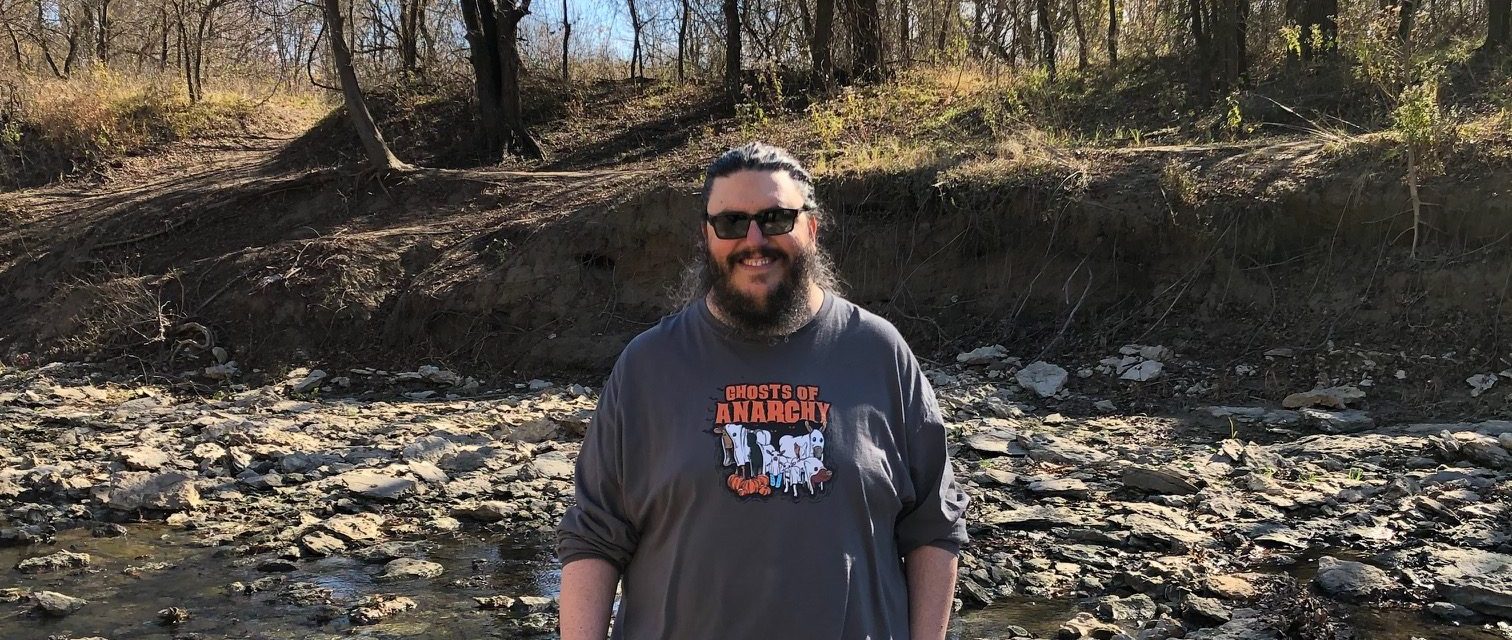
Filed Under: Transcript

Chopping Away: Happy Halloween!

October 31, 2021 by cpgronlund Leave a Comment

Pumpkings and brambles surrounded by various candles.

Happy Halloween…or blessed Samhain if you celebrate! It’s my favorite day of the year; in part, because it’s also my wife’s birthday. But fall is my favorite season, and no day seems to sum up autumn better than Halloween.

How’s the Writing Going?

It hit me last Tuesday that I hadn’t written an update about the previous week. It became a busy week at work, and there wasn’t much to say other than, “Still writing…”

This week, things are more clear…which is good because it’s almost November, and I’d like to release “In Cypress Cove” on the 26th. (Or even earlier that week so people in the U.S. have something to listen to if traveling for Thanksgiving.)

The problem with the story is not really a problem — just decisions to be made. Because there are jumps in time, I’m working at making those leaps not seem jarring. But for those who insist all writing must be shown…time in fiction can be a funny thing. Sometimes, to show things develop can be boring (“While the story is waiting for THIS to occur, everybody worked and did normal things…and this is not very interesting to read…”).

Sometimes small info dumps are vital, and seeing which storylines matter most need to be decided.

“In Cypress Cove” could easily be a novel. But it’s a short story. So, I’ve been writing random scenes, and this week things have come together. (Now, it’s a matter of filling in the gaps and some editing.)

What Else Is Up?

Not a whole lot of other things going on. Work and writing have kept me busy…and just the usual hanging out with loved ones and enjoying cooler mornings in North Texas. Hell, it was 38F yesterday morning, even though it climbed into a “cool” mid 70s on a sunny afternoon I know a lot of people loved…but I look forward to complete cooler days on the horizon.

I guess, since it’s Halloween, if you’ve not listened to “The Hidebehind,” it’s a good day to do so. Also, if you’re doing NaNoWriMo this year, be mighty, and have fun!

Other than that, all I’ve got are some food pics…

Hot sauce bottles: Yellowbird Plum Reaper, Bliss and Vinegar, and Super Serronic.
I might need an intervention when it comes to limited/seasonal Yellowbird releases. (Their other exclusive/limited sauce, Hitchhiker, is an REI exclusive right now…so I COULD be worse…)
Onion, carrots, celery, and Sweet Earth faux chicken in a pot.
Celebrated my wife’s birthday last night with my mom. Made vegan “chicken” and dumplings…
Vegan chicken and dumplings simmering in a pot.
The addition of broth and dumplings!
Dinosaur kale with dried cranberries and pistacios.
My mom made a yummy kale salad!
Bananas, blueberries, and almost milk whirring in a Vitamix.
I splurged and got my wife a Vitamix for her birthday. (She’d been wanting one for yeeeeeeears! First run: smoothie bowl for breakfast!

Filed Under: Blog Tagged With: a-peek-at-process, chopping away

Chopping Away: “Short” Stories

October 20, 2021 by cpgronlund Leave a Comment

Rays of light from a sunset illuminate the sky at dusk. A crescent moon adds to it all.

I used to get in and out of stories quickly. Three thousand…maybe thirty-five-hundred words was plenty.

Today, that old “normal” has almost doubled.

Even something as seemingly basic at the start, like “Milkboy,” became more than a basic story.

It’s not that the stories I now write are bloated; rather, it seems I have more to say. I consider the ripple effects of actions more than when I was younger. (Not that I explore every possibility, but I’m not as focused on one thing as I once was.)

I suppose, with age, I take time and put more into the things I do.

In Cypress Cove

I’ve talked enough about November’s Not About Lumberjacks story, “In Cypress Cove,” that you know it’s about two guys who reclaim sunken timber in East Texas spotting an ivory-billed woodpecker. I planned to share the story last November, but I knew it would take more time than I had in 2020.

Younger me would have established the woodpecker spotting, and then likely made the focus on the main characters battling a timber company told to shut down its operation to save the bird. But even a small area in East Texas being shut down for a conservation effort would have a bigger effect on the area.

With a confirmed sighting of such a rare and magnificent bird, small towns in the area would see a flood of birdwatchers. People settled in the area for generations might see restrictions on their own land. Maybe new friendships begin or old rivalries reignite. (Say…a former high school bully now owning a timber company returns to his old ways in a battle against the two people he gave the most grief decades before).

Suddenly, that 3,500-word story can grow to 5,500 words with little effort. Probably even a bit more…

Last Week

Last week was a good week for Not About Lumberjacks. I released the Behind the Cut episode for “Milkboy,” and it’s doing better than any other Behind the Cut episode in its first few days of release. Hell, it’s doing better than most full stories…and people keep listening to “Milkboy” as well. (Granted, the numbers for Not About Lumberjacks have never been worthy to merit the effort I put into it if I saw the show as something more than a thing that keeps me busy writing stories I like.)

“In Cypress Cove” has hit that point where I’m seeing its shape much better than I was at the start. Hell, I think I even know how it ends!

Still…there’s quit a bit to still write, and the sounds needed for the episode will take a bit of an effort to make.

Perhaps I got spoiled with the two-week turnaround in getting “Milkboy” written, recorded, and online. But…it’s given me a bit more time to ensure however long “In Cypress Cove” ends up, that it’s the story it needs to be…

Sunrise rainbow in pink skies...
It was a good week for North Texas skies…

* * *

Also, for no reason (other than she’s cool), here’s a photo of my mom’s little pot-roast of a cat, Preeda…

A napping Siamese cat.

Filed Under: Blog Tagged With: a-peek-at-process, chopping away

Milkboy – BtC Transcript

October 16, 2021 by cpgronlund Leave a Comment

[Listen]

[Intro music plays]

[Woman’s Voice]

This is Behind the Cut. The companion show to Not About Lumberjacks.

[Music fades out]

Christopher Gronlund:

Behind the Cut is a behind-the-scenes look at the latest episode of Not About Lumberjacks and likely contains spoilers of the latest episode. You’ve been warned…”

* * *

John Irving doesn’t write a novel until he can work from the ending back to the beginning. Other writers plot out everything before they sit down and begin writing stories. These kind of people are called planners by other writers.

And then there are writers who begin with little more than an image that intrigues them. Haruki Murakami once said, “When I start to write, I don’t have a plan at all. I just wait for the story to come. I don’t choose what kind of story it is or what’s going to happen. I just wait.”

These kinds of people are called pantsers by other writers because they write by the seat of their pants.

I am a pantser. I was going to begin this episode of Behind the Cut talking about how the last handful of Not About Lumberjacks stories were started with no end in mind. But then, when I looked at the Quick List on the site containing all the stories, I realized almost everything I write is an act of discovery.

* * *

In the fall of 1979, one of my best friends introduced me to a little game called Dungeons and Dragons. As fifth graders, we were just realizing there was a subculture that played wargames, and something blurring the lines between that and telling stories intrigued us.

But in those first couple years, the stories were contained within the walls of dungeons. Players might figure out a different way through a challenge, but you were bound by the environment.

Then came an adventure module called The Village of Hommlet. Sure, adventurers eventually found a dungeon, but the first part of the game was wide open. Players could do anything! And I loved running friends through that adventure because not knowing what would happen next fascinated me. From that point on, I loved running games in open places where maybe I had an idea for the evening, or even a larger story arc, but if my friends wanted to do something else entirely, I ran with it and made up adventures in the moment.

It was great training for writing stories.

* * *

When I started writing the latest Not About Lumberjacks story, “Milkboy,” I only knew I would base it on a shitty thing a friend and I did to our best friend in, I think, 1990…maybe ’91. Before common access to the world wide web was a thing, if you had a geeky computer friend like my friend Mark, you might have hung out on a bulletin board system—a computer running a network people called to share messages and files. (Yeah, it was all pretty much on some person’s computer in, probably, some crappy apartment like Tim and Mark’s.)

Mark belonged to a BBS and eventually let his roommate, Tim, create a profile and access things. Me as well.

One evening, Mark and I decided to create a fake online persona named Milkboy and mess with Tim. The earlier parts of “Milkboy” are wholly true. The real ending, though, went something like this:

Tim did want to meet Milkboy in real life. Mark and I knew we had a problem.

One day Tim was so kind to take Mark and me to the Modern Museum in Fort Worth, Texas…and then to dinner at a pizza place on the way home. There, Mark and I told him that we were Milkboy. Tim was rightfully hurt, and Mark and I felt like shit. (To this day, we’re surprised Tim didn’t stick us with the bill and leave us stranded in Fort Worth. But then, you can probably tell, Tim was kind of a better guy than Mark and me.)

It’s a funny story to tell when hanging out and talking about stupid things done in one’s early adulthood, but it’s not worthy of publication. It needed something more.

* * *

I’ve talked about my love for the “What If?” game before. I enjoy looking at even a mundane situation and asking, “What if…” and seeing where it takes me. Often, as a storyteller, it eliminates storylines that aren’t very strong.

Not knowing where I was taking “Milkboy,” one of those “What ifs” was, “What if Tim found out the truth and fucked with us in return? What if Tim not only said he wanted to meet Milkboy, but was going to introduce us to him?” (Yeah, this person we made up.)

That’s an interesting turn, which led to figuring out how to pull it off.

And that’s what I ran with for “Milkboy.”

* * *

I’m proud of all the stories on Not About Lumberjacks, but the stories created for the show—not the stories I’d written before it started—impress me the most.

For a moment, though, “Milkboy” seemed like a story just going through the motions. It was good, but…if put against, say, the last five stories on the site, it would have definitely been a bit of a dip. It didn’t feel right—it needed something more.

* * *

There are probably more than a half-dozen quotes about sculpting attributed to Michelangelo with a gist of, “There’s something wondrful in that block of marble, and it’s my job to find it and make it real.”

I’ve read and watched interviews with other artists about how they know a piece is done, and most of them say something to the effect of, “I know it’s done when it feels right.”

“Milkboy” did not feel right…just as “Calling Out of Time” didn’t feel right until I reached the end. “A Deathly Mistake” as well…really most stories on Not About Lumberjacks.

“Milkboy” needed something more than, “Hey, let’s fuck with Tim. Oh, look—Tim turned the tables on us. Oh, wasn’t that funny?”

But what?

* * *

If you’ve listened to “Milkboy” you know it was released on Tim’s birthday. You know I’m still friends with Tim and Mark. So…I knew two things: the story needed another turn that put it into the realm of ridiculous…and, in the end, it had to be a heartfelt tale of decades-long friendships.

Enter Demon Milkboy…

* * *

Initially, I just thought it would be funny if Milkboy/Lance kept showing up. Turning it into a tale of obsession…either the guy Tim got to play Milkboy sticking with the role like a method actor, or…just being a bit off and obsessed with the three main characters.

Again, it was a good turn, but it still felt small to me. But as I started writing the scenes where Lance started following us, it started getting creepy. And…because, along the way, I realized I was writing a gift to Tim for his birthday (and a gift to Mark, as well), I knew it would end up being heartfelt no matter how far I chose to take it.

My goal was to make Tim and Mark laugh by how ridiculous the story would become (like something out of an old GURPS one-shot role-playing game night), I knew if the story could be a love-letter to our friendships, all the better!

* * *

I will go to my grave laughing every time I think about Demon Milkboy singing his version of the happy birthday song to Tim…particularly, the “Milkboy will never leave you…” line. It works better with the demon voice. [Demon Milkboy Voice] “Milkboy will never leave you…” See? Anyway, there are plenty of laughs once Demon Milkboy drops from the sky in front of Mark and me on the access road to I-35 in Denton, Texas (the town where I met Tim). But Tim and Mark, and many other friends, helped me battle my own demons. We’ve all helped each other through so many rough times over the decades, so…I figured out Demon Milkboy needed to become a symbol of the hard things that shaped us all before we even knew each other…but also a symbol about how the three of us are still alive because there were times we all thought about ending everything…and kept going because we had each other’s support.

* * *

There was still one problem with “Milkboy”—I felt bad for killing Lance.

Something I’ve mentioned to no one until now: Lance is based on a guy Tim and I worked with in our early 20s.

Like I said, Tim and I met in Denton, Texas when we both answered a newspaper job ad as door-to-door salesmen. We were to sell a sort of encyclopedia set-slash-learning system for kids.

Weekends found us traveling around Texas and Oklahoma, trying to sell our wares to people near military bases, middle-class neighborhoods, and they once dropped me on a reservation in Oklahoma. It was a shitty job, but I kept it because I liked Tim…and this guy named Jeff.

To see Jeff, you’d think he could own the world. He was handsome and fit; talented and kind. He had every reason to be a narcissist, but he was more interested in other people than himself. He had a way of making you feel special in his presence.

One night in Oklahoma, I was wandering the edge of my sales territory and saw Jeff across a highway in his. We both sucked at being salesmen, so we decided to hang out. That’s when Jeff confessed to me how much he struggled with life. He told me he hadn’t eaten in days because he was broke. (I at least had a second job on a sprout farm, so I at least had free access to garbanzos, adzuki beans, and other forms of protein. And, God—plenty of greens!)

We scrounged up enough change to get Jeff a hotdog at 7-11. I have no idea if they still sell hotdogs based on all you could fit into the little cardboard hotdog containers, but at the time…if you could cram that thing full of food and close it, you could have it for a flat price.

Jeff packed every space around the hotdog with chili. He could barely close it. I reached into his pocket and dug change to pay for it because the container was about to fall apart in his hands.

We wandered to a school yard, where Jeff planned to sit on a swing and eat his first bit of food in days.

He dropped the hot dog in the dusty dirt below the swingset…and then he broke down in tears.

He plopped down on the swing with his stomach, hovering inches over the exploded chili dog on the ground. He sobbed like he’d just lost a loved one…it was a mournful howl.

A passerby might have thought, “It’s just a chili dog, dude,” but there was soooooo much more behind those tears: feelings of failure, shame, and who knows what else?

When Jeff’s crying slowed, he looked up at me and said, “Would you think any less of me if I ate this thing out of the dirt?”

Of course, I wouldn’t—and I watched someone who looked destined for greatness I could only imagine eat a cheap chili dog off the ground, dirt be damned! Later that night, he told me about how he had a hard time making friends; how he felt like a failure in his family’s eyes; how he had so many aspirations growing up, but how life didn’t turn out the way he always thought it would.

Like I said, we all have our demons…

* * *

I didn’t want “Milkboy” to be a self-indulgent story full of inside jokes that wouldn’t appeal to a wider audience. I wanted it to be relatable to everyone, even though it’s perhaps the most ridiculous story I’ve shared on Not About Lumberjacks. (If I never wrote and shared “Booger,” I’d say “Milkboy” is definitely the weirdest story on the site, but people still tell me about how much the sounds in “Booger” got to them…)

Anyway…I went into “Milkboy” not knowing where it would end up, and, in the process…ended up writing one of my favorite stories ever.

Stepping into the unknown is never easy—whether it’s a story or life itself—but if you do it enough, preferably with the company of a handful of loved ones, sometimes the ending surprises you in the most wonderful of ways…

* * *

Thank you for listening to Not About Lumberjacks and Behind the Cut. Theme music for Behind the Cut is a tune called “Reaper” by Razen. Visit nolumberjacks.com for information about the music, the episodes, and voice talent.

In November, the annual tradition continues as I share the most NOT Not About Lumberjacks story of the year, in honor of the show’s sixth anniversary! What’s the story about, you may be wondering? Well, two deadhead loggers find something remarkable in the Piney Woods of East Texas, putting them at odds with a large timber company.

Until next time: be mighty, and keep your axes sharp!
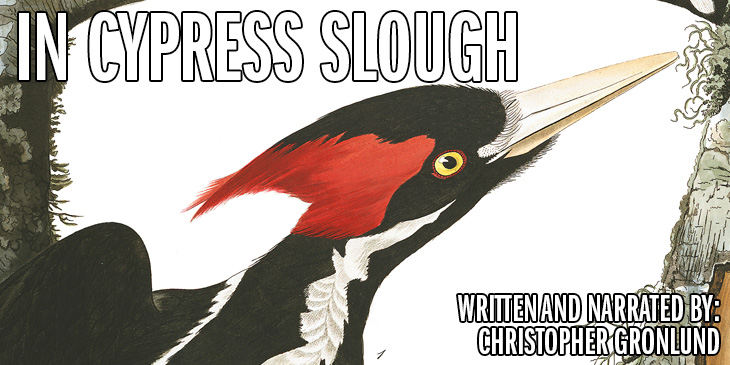
Filed Under: Transcript

  • « Previous Page
  • 1
  • …
  • 12
  • 13
  • 14
  • 15
  • 16
  • …
  • 29
  • Next Page »

Subscribe to the Mailing List

* indicates required
A monthly update and links to snazzy things! (I will never share your email address with others -- even ax-wielding lumberjacks!)

Copyright © 2026 · Epik on Genesis Framework · WordPress · Log in